By Patrick McGinn-Hammer
Originally published in The Homer News
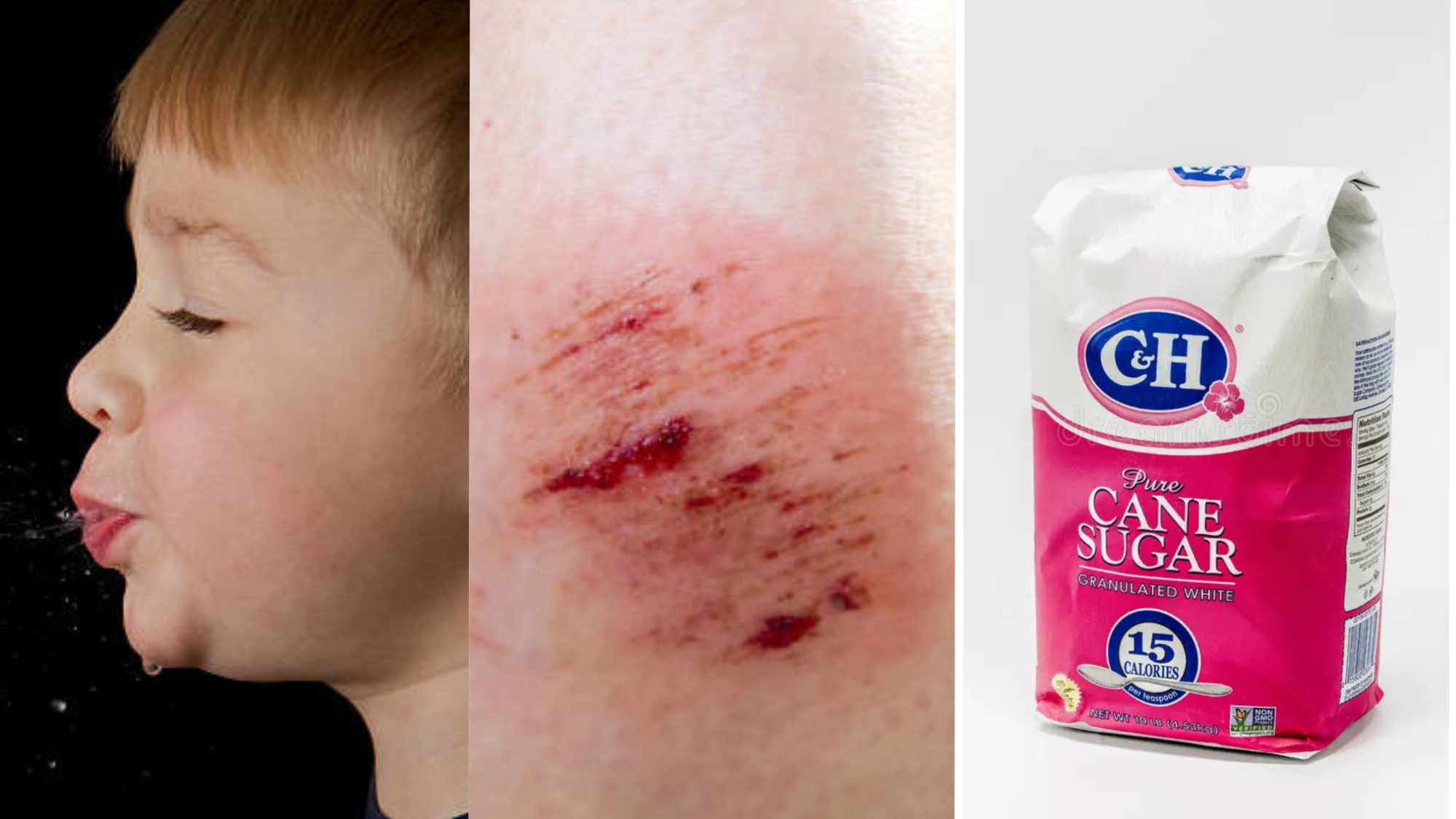
Stock-image collage by yours truly
Next to me sat my friend Delia. We’d been sitting on the pantry chest for a long while. Her head was in her hands, and her eyes were halfway closed. She kept her ankles tucked beneath her and her face was calm like a portrait. I didn’t know if she’d always looked like that or if it was just because she was bored, but I kept looking at her.
The bag of sugar my aunt handed me ages ago was heavy. It was not as heavy as a watermelon, but it was heavier than a good-sized rock, and that surprised me. I juggled it between both hands clumsily. We were sent just to get a cup, but my aunt, busy with all the talking, handed us the whole bag. I figured Momma wouldn’t mind. I didn’t mind. Holding it made me feel important.
My uncle’s house was clean. It smelled strongly of fresh paint, provoked by the hot lake air pressing through the screens. He and his friend were talking. Real loud.
“It just isn’t right,” my uncle said, “Homer’s one of the last towns in America without a billboard. Or a strip mall. Or a strip club for that matter. Folks come here to get away.”
My uncle tapped the side of his coffee cup, “With these billboards lighting up the night, no doubt we will never see as many stars again.”
“Hell, there’s nothing we can do. There’s money tied up in it,” his friend said. “The councilman owns the land they’re gonna build on.” He leaned over the table with both hands, like he was steadying a boat.
My aunt was washing dishes in the sink, and she kept turning to jump in.
“I was at the last town meeting for it,” she said, “I asked if they’d ever even seen the property or stepped foot on it and they told me that questions may only be asked during the ‘discovery period’ of the hearing.”
“Homer, they’re all crooked. They’re makin’ money off it,” my uncle said.
“Well, what about the paddleboarding woman?” said my uncle’s friend. “Over on the south end?”
My uncle chuckled. “Oh yeah, her. I saw her. She stood up at the meeting, said that they had to put it to a public vote. They said, ‘We can’t put this matter up for public decision.’ She said, ‘Oh yes you can, and you will.’”
“Don’t count her short,” the friend said. “She’s got money. You wouldn’t think it, but she owns a family business—eighty-some employees. Doesn’t seem it though,” he paused, “They’re a good, modest people.”
“She’s ordering in lawyers from the city. Real, New York, bulldog lawyers,” my uncle added.
That’s when my aunt turned and remembered why we were still sitting there. She walked over, wiping her hands on her apron, lifted the sugar bag, felt it, and shoved it back into my arms.
“You kids take this home. Don’t dawdle.”
Delia and I did dawdle, but only because it was always such a pretty walk.
The sun was coming in at its evening sideways haze and made the bugs into floating glitter. The dirt road to my house wrapped along the lake, the trees leaning over like they were whispering to the water. Delia let go of my hand and jogged ahead of me, dirt spilling up from under her feet. I was beginning to call out to her when she spit. A big glob. It landed splat onto the gravel.
“You always do that?” I asked.
“Yeah,” she said, wiping her mouth with the back of her hand. “Feels good.”
“It can’t feel that good,” I said, “Not when you’re doin’ it all wrong. Here, watch.”
I squinted and hocked one long and far, aiming at a flat rock by the weeping willows. It landed close. Real close. She tried again and missed. I tried again and missed worse. She laughed at me, giggling like a girl always does, and my face felt red as we got to pushing each other. I pretended to fall, shuffling backwards, when she laid flat into me. Then I really did fall. I held the sugar high above my head, clutching it with both hands as if it were treasure. She pinned my chest with both her elbows and stared me in the eye.
“I win!”
I told her, “My uncle says the paddleboard lady is gonna’ fix it.”
Delia went first up the dusty wooden steps to my home and waited for me on the screened-in porch. We entered and it smelled of sweet pies. Momma is always baking for the Church. In the kitchen, she was already stirring a bowl on the counter. She had her hair in a twist and her sleeves rolled up. She looked like an old woman from an old painting.
“Sugar!” I said, plopping the bag on the counter like I’d caught a fish.
She turned and blinked. “All of it? She gave you the bag?”
“They said we could have it.”
“Well, ok then. Hey, and what took y’all so long?”
“On the way back,” Delia proclaimed, “a wild fox tried to steal the sugar from us! I didn’t get a great look at him before we chased him off, but I remember he had one pussing eye.” She pulled her left eye wide open with both hands.
My mom stared at her blankly before pulling a chair to the counter, “Do me a favor, bud, and get to peeling these apples.”
I climbed up on the chair, and Delia climbed up next to me. It was a tight fit, but neither of us seemed to mind.
Momma went back to stirring, and we started on peeling the apples.
We worked in silence for some time. Then she asked without turning around, “How are they? How’s your uncle these days?”
“Mad about signs,” I said.
“What signs?”
“Big billboard ones. Up by the lake. Uncle said they’re gonna ruin everything, even the stars. And his friend said there’s a woman on a paddleboard on her way to get lawyers with bulldogs.”
She smiled a little and shook her head. “Well, as long as somebody’s got a plan.”
The day of the last hearing of the billboard case was hot as hell. Delia and I thought we’d walk there early and get settled ahead of time, but when we got there, the lot was already full. Cars parked in the grass.
She came up with a game for the walk: we pretend we’re brother and sister, but I’m adopted and she’s royalty. She gave a royal wave to the man in the parking booth on our way in, but he didn’t wave back. We climbed the stairs to the stone building, and I stood up straight as I could, pretending like we weren’t kids sneaking in where only grownups were supposed to be.
Inside the mayor’s building, it smelled of old paper and looked like a den of madmen. We couldn’t see anything because everyone around us was so much taller. I didn’t want to run into someone who would send us home, so we went upstairs to get a better grasp.
Below the balcony, the gallery was packed. Folding chairs in rows. Momma was there in the back, fanning herself with a flier that read “Dark Skies”, and rambling to a friend. I crouched and watched her through the bars of the railing, hoping she didn’t see me. My uncle and aunt were there too, and his angry friend with them. They were sitting up further, all of them still. In the corner by the councilmen’s wives, little babies rolled on the floor and drew in the dust with their toes. Delia leaned over the railing beside me, pretending her hand was a ship sailing across the heads of the people.
Up front, was the woman, the paddleboard lady. I realized I’d seen her before. She had long flowing curly hair and a crisp shirt. She was surrounded by men in suits with slicked hair and stacks of papers as thick as pillows. Everything about the woman looked like she knew she was right. I could tell she was going to win.
The first time I saw her, she was at the farmer’s market buying ten-x cheese. The cashier had cut two thirds of a pound when she had asked for a half. She said it was ok, and after she paid, she left her change in the tip bucket. The second time I ever saw her, I was walking on the dirt road that goes along the lake. She was in the middle of the lake, floating on her paddleboard, lying down and gazing at the clouds. She was a living painting.
We didn’t stay at the courthouse long. I could tell she was going to win, and everyone there was bored and boring.
The road we took back home was busier and paved. Trees grew closer and straighter here, and the birds had to sing louder to muffle the sound of the cars. Delia and I had had an argument when we left, and I still didn’t know what it was about. I said the cracks in the pavement looked like rivers on a map, but she demanded that they looked wild like lightning. I told her that the cracks don’t move and that’s what lightning does, and then she ran. I liked her but I didn’t understand her.
Now she was walking far ahead of me. She turned toward the trees and I saw her spit. It dribbled down her chin to the pavement. She stared at it and stopped walking. I started to run, trying to catch up, but stepped wrong, and went down hard into the black tar pavement. My knee scraped open. A little black rock stuck in it.
She came back and squatted beside me, “You ok?”
I studied my knee and fingerpainted it with the blood. Delia sat down next to me and spit on the ground to her side. I ran my fingers again over my weeping knee. She didn’t look like a portrait anymore; she looked like a part of my painting.
She spit again, properly far this time. Real far.
